NCN SONATA 18 project · implementation and results
New advanced materials for effective bleeding control and antibacterial protection in battlefield and emergency medicine
Project number
2022/47/D/NZ7/01821
Programme
SONATA 18, National Science Centre, Poland (NCN)
Principal investigator
Dorota Chełminiak-Dudkiewicz, PhD
Host institution
Faculty of Chemistry, Nicolaus Copernicus University in Toruń
Duration
2023–2026
Funding awarded
PLN 888,750
The project is funded by the National Science Centre, Poland, under the SONATA 18 call (no. 2022/47/D/NZ7/01821).
About the project
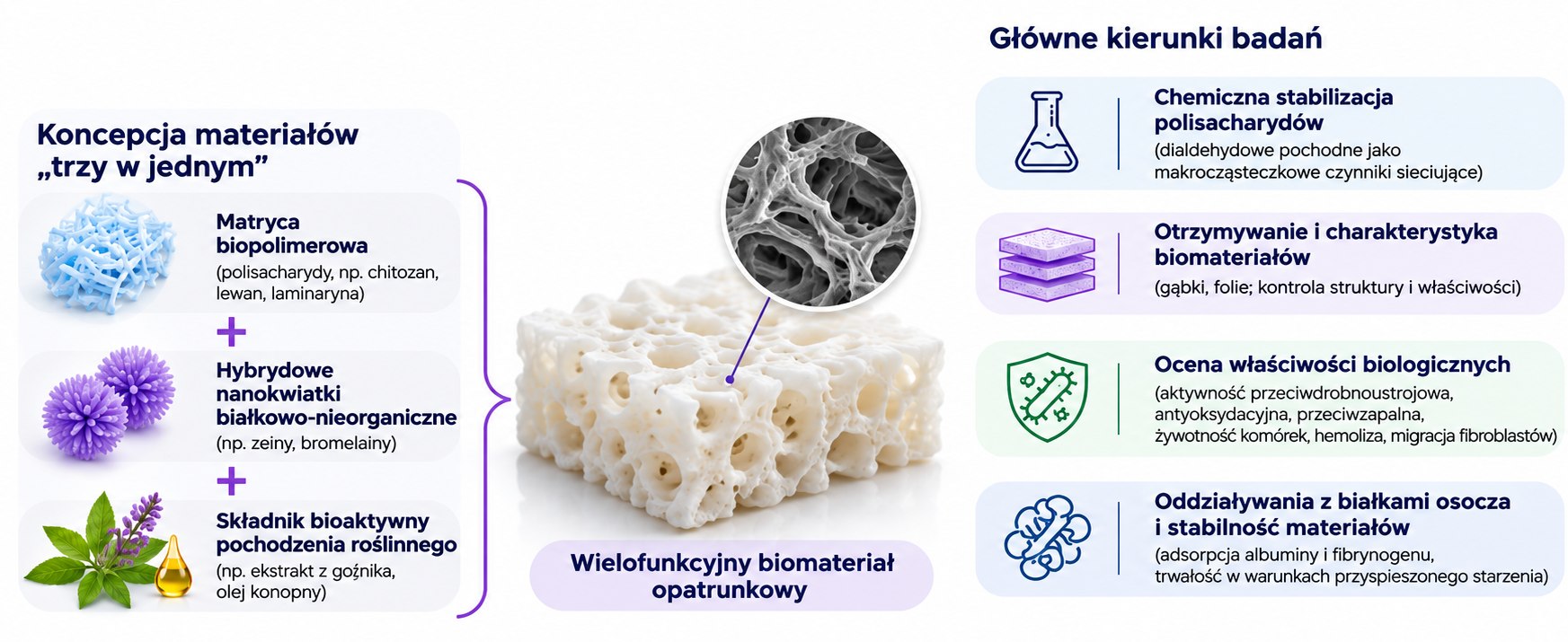
The aim of the project was to develop and characterise multifunctional polysaccharide biomaterials with potential applications as wound dressing materials, in particular for protecting wounds at risk of infection in emergency medicine and battlefield conditions (TCCC).
The central idea was a “three-in-one” material concept, combining a biopolymer matrix, hybrid protein–inorganic nanoflowers and a bioactive component of plant origin. In parallel, strategies for the chemical stabilisation of polysaccharides were developed, making it possible to control the structure, durability and functional properties of the resulting biomaterials.
Figure in Polish.
Implementation and key results
Developed biomaterials
Within the project, a broad group of polysaccharide biomaterials in the form of porous sponges and polymer films was developed and characterised. They were obtained from polysaccharides of diverse chemical structure, such as chitosan, levan, kefiran, paramylon, laminarin, lentinan and fucoidan.
The materials were functionalised with bioactive components, including cannabis oil, juniper oil, extracts of the industrial hemp variety Henola and extracts of mountain ironwort (Sideritis scardica). In selected systems, violacein and a Mannich base derivative were also used. The studies made it possible to determine how the choice of polysaccharide matrix and functional components affects the microarchitecture, physicochemical properties and biological activity of the resulting materials.
New strategies for the chemical stabilisation of biomaterials
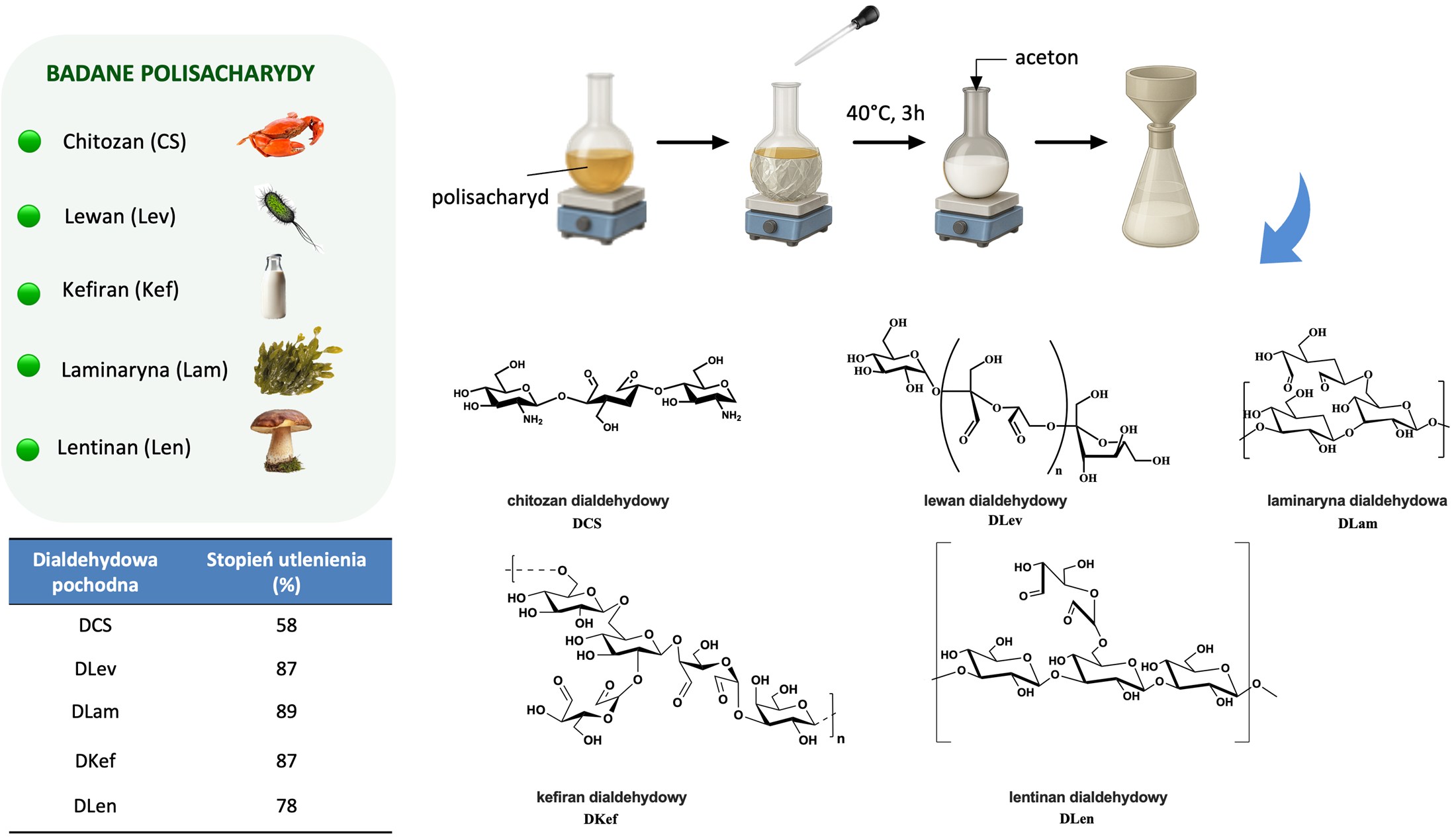
One of the key achievements of the project was the development of an alternative strategy for the chemical stabilisation of polysaccharide biomaterials using macromolecular cross-linking agents. To this end, dialdehyde derivatives of five polysaccharides were obtained: chitosan, kefiran, levan, laminarin and lentinan.
The use of these derivatives made it possible to form polymer networks through reactions of aldehyde groups with the amino groups of chitosan, leading to the formation of imine bonds. This approach provided an alternative to conventional low-molecular-weight cross-linking agents.
The studies showed that the cross-linking efficiency and the properties of the final biomaterials depend not only on the aldehyde group content but also on the chemical structure of the polysaccharides used. An appropriate choice of macromolecular cross-linking agent made it possible to tune the structure, mechanical properties, swelling capacity and stability of the resulting materials.
Scheme for the preparation of dialdehyde derivatives of selected polysaccharides used as macromolecular cross-linking agents for chitosan biomaterials (figure in Polish).
Multicomponent biomaterials with hybrid nanoflowers
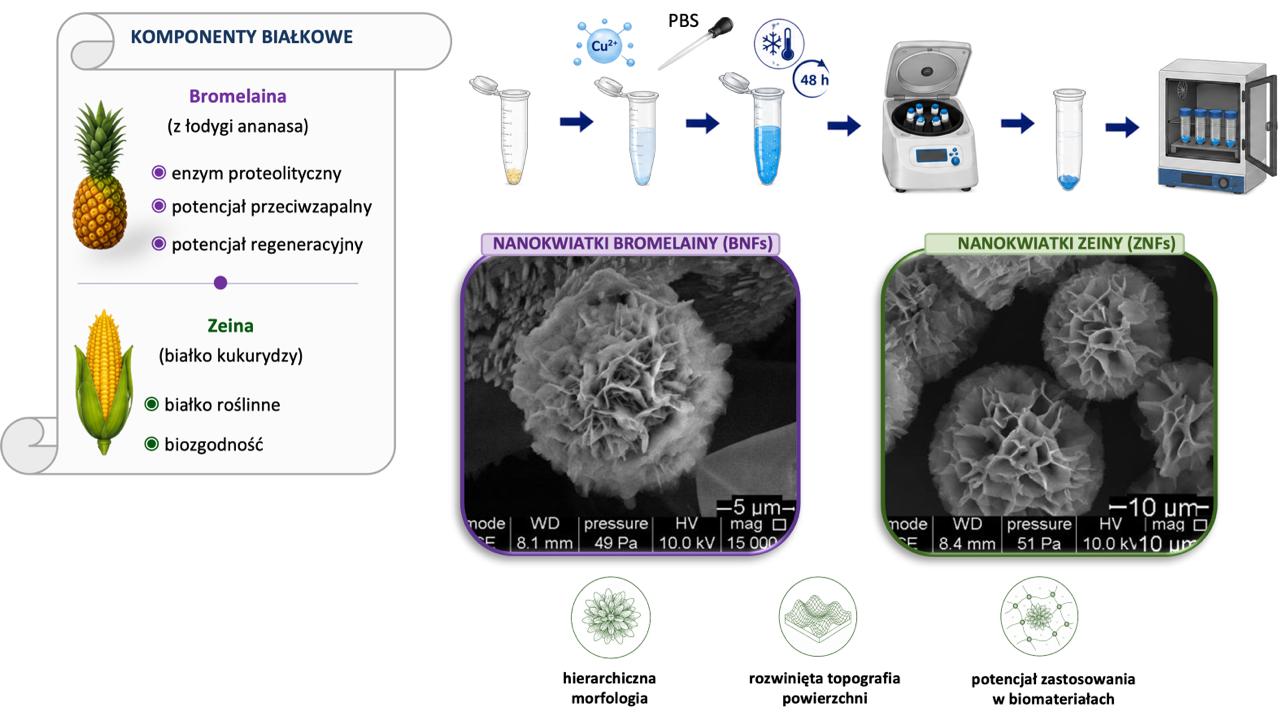
An important achievement of the project was the development of multicomponent polysaccharide biomaterials containing hybrid protein–inorganic nanoflowers. The studies used nanoflowers based on two proteins, bromelain and zein, which were integrated into purpose-designed polymer matrices.
The original “three-in-one” material concept was realised in systems with a matrix composed of chitosan, levan, fucoidan and lentinan, functionalised with zein nanoflowers and extracts of mountain ironwort (Sideritis scardica). The materials were stabilised with dialdehyde lentinan, yielding multicomponent structures with tunable physicochemical and biological properties.
In parallel, chitosan–laminarin composites were developed containing bromelain nanoflowers and a Mannich base derivative with previously demonstrated antimicrobial activity. Incorporating these components made it possible to obtain materials combining suitable structural, mechanical and sorption properties with biological activity.
The studies showed that the composition of the matrix, the way it is cross-linked and the type of functional components make it possible to shape the microarchitecture and properties of the resulting biomaterials. These results provide a basis for the further design of multifunctional wound dressing materials.
Protein components, preparation scheme and morphology of hybrid protein–inorganic nanoflowers based on bromelain (BNFs) and zein (ZNFs), used to functionalise polysaccharide biomaterials (figure in Polish).
Biological properties of the developed biomaterials
The developed biomaterials underwent a comprehensive evaluation of their biological properties, including antimicrobial and antioxidant activity, anti-inflammatory potential, cytocompatibility, haemolysis and their effect on fibroblast migration in vitro.
Antimicrobial activity
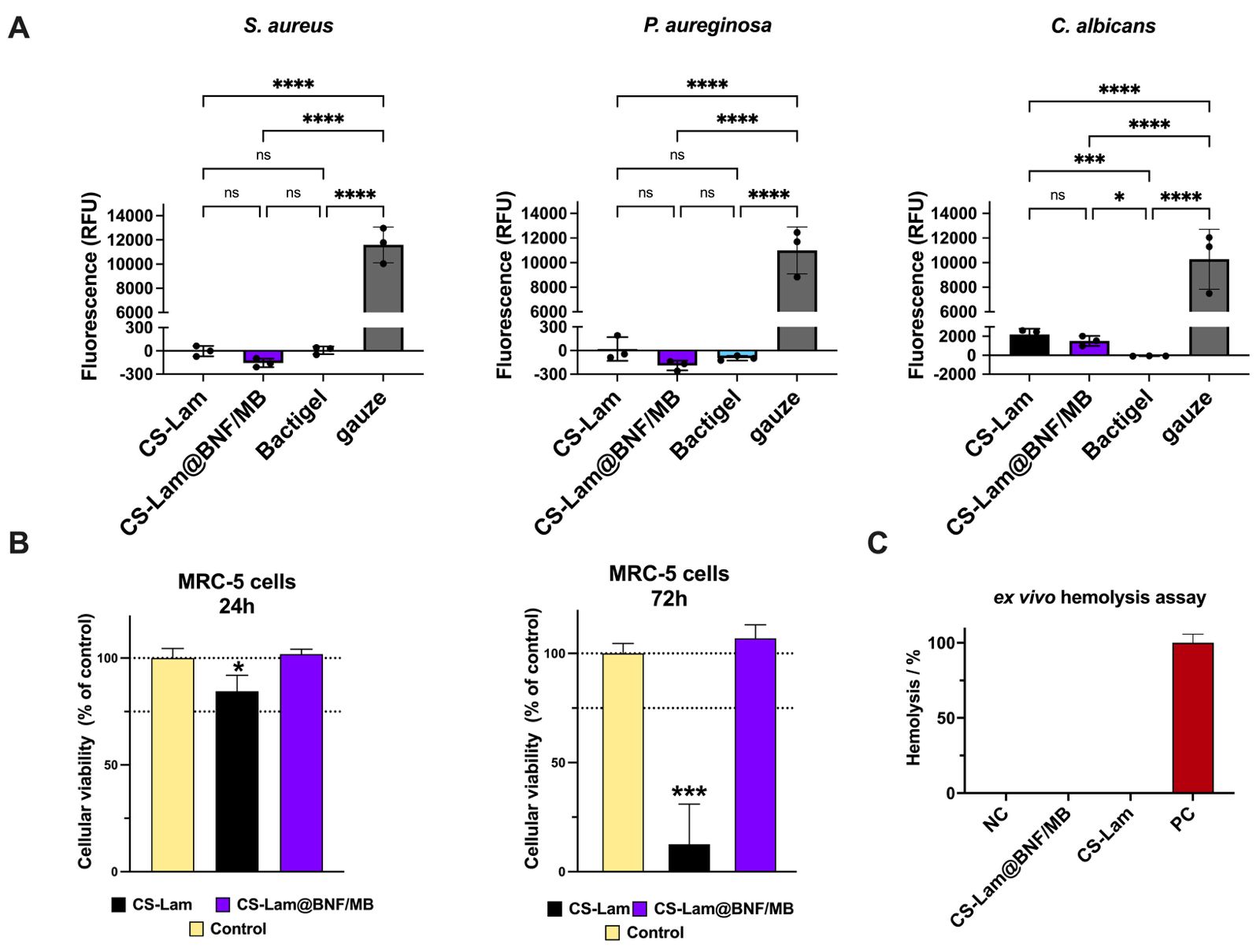
Selected biomaterials showed activity against microorganisms associated with wound infections, including Staphylococcus aureus (also MRSA), Pseudomonas aeruginosa and Candida albicans. Particularly favourable results were obtained for chitosan–laminarin composites containing bromelain nanoflowers and a Mannich base derivative, for which the viability of MRSA was reduced by 97%, P. aeruginosa by 93% and C. albicans by 88% in the tests performed.
The antimicrobial activity of selected composites was also compared with the commercial dressing Bactigras. In some of the tests, no statistically significant differences were found between the tested materials and the positive control, which indicates their potential for further research on active wound dressing materials.
Antioxidant activity and anti-inflammatory potential
Selected biomaterials also showed antioxidant activity and the ability to inhibit protein denaturation in the laboratory model used. For composites containing bromelain nanoflowers and a Mannich base derivative, antioxidant activity determined by the DPPH method reached 87.4%, while inhibition of protein denaturation was up to 83.6%.
Cytocompatibility and haemolysis
Studies with fibroblasts showed that appropriate functionalisation of polysaccharide matrices can significantly influence the cellular response. Particularly interesting results were obtained for chitosan–laminarin composites containing bromelain nanoflowers and a Mannich base derivative. After 72 hours of incubation, the viability of MRC-5 cells exceeded 95%, whereas a marked decrease in cell viability was observed for the non-functionalised chitosan–laminarin matrix.
Selected biomaterials also showed a low level of haemolysis, not exceeding 5% under the experimental conditions used.
Biological evaluation of chitosan–laminarin composites containing bromelain nanoflowers and a Mannich base derivative (CS-Lam@BNF/MB): (A) antimicrobial activity against selected microorganisms, (B) viability of MRC-5 fibroblasts after 24 and 72 hours and (C) haemolysis in an ex vivo assay.
Fibroblast migration
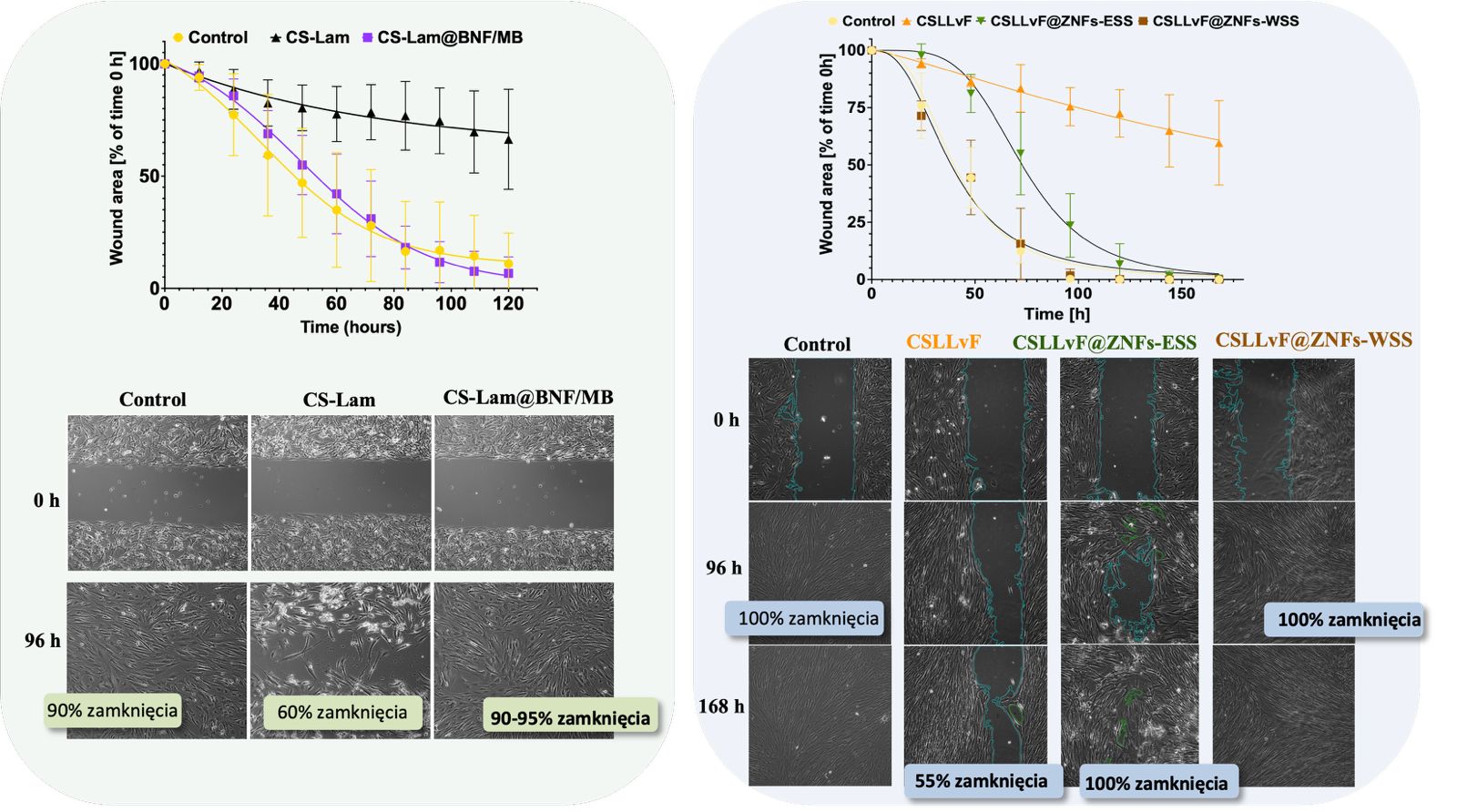
The effect of the developed materials on cell behaviour was also assessed using a scratch assay, which makes it possible to monitor the closure of a cell-free area in a fibroblast culture. The studies showed that the composition and the way the biomaterials were functionalised affected the course of this process.
For composites containing bromelain nanoflowers and a Mannich base derivative, 90–95% gap closure was achieved after 96 hours, compared with about 60% for the non-functionalised chitosan–laminarin matrix. Favourable results were also obtained for selected materials containing zein nanoflowers and mountain ironwort extracts, for which complete closure of the cell-free area was observed within the analysed period.
These results indicate that it is possible to design biomaterials that combine antimicrobial activity with favourable results in selected biological tests, providing a basis for further evaluation of their potential use as wound dressings.
Results of the fibroblast migration test (scratch assay) for selected polysaccharide biomaterials. Some hybrid systems supported the closure of the cell-free area in vitro, achieving almost complete or complete gap closure within the analysed time.
Interactions of the biomaterials with plasma proteins and material stability
Adsorption of albumin and fibrinogen
An important part of the project was the characterisation of interactions between the developed biomaterials and plasma proteins, in particular albumin and fibrinogen. The studies showed that the chemical composition of the polysaccharide matrix, the way it is functionalised and its surface properties affect the amount and nature of the adsorbed proteins.
For multicomponent biomaterials containing zein nanoflowers and mountain ironwort extracts, increased adsorption of both proteins was observed compared with the reference material. After 24 hours, albumin adsorption increased from 3.1 to 3.9–4.0 µg/cm², and fibrinogen adsorption from 2.8 to 3.5–3.6 µg/cm². Analysis of the adsorption isotherms showed a better fit of the experimental data to the Freundlich model than to the Langmuir model, indicating the heterogeneous nature of protein interactions with the surface of the tested materials.
The results confirmed that protein adsorption can be modulated through an appropriate choice of components and modification of the microarchitecture of the biomaterials, providing information relevant to the design of materials intended for contact with the biological environment.
Stability during accelerated ageing
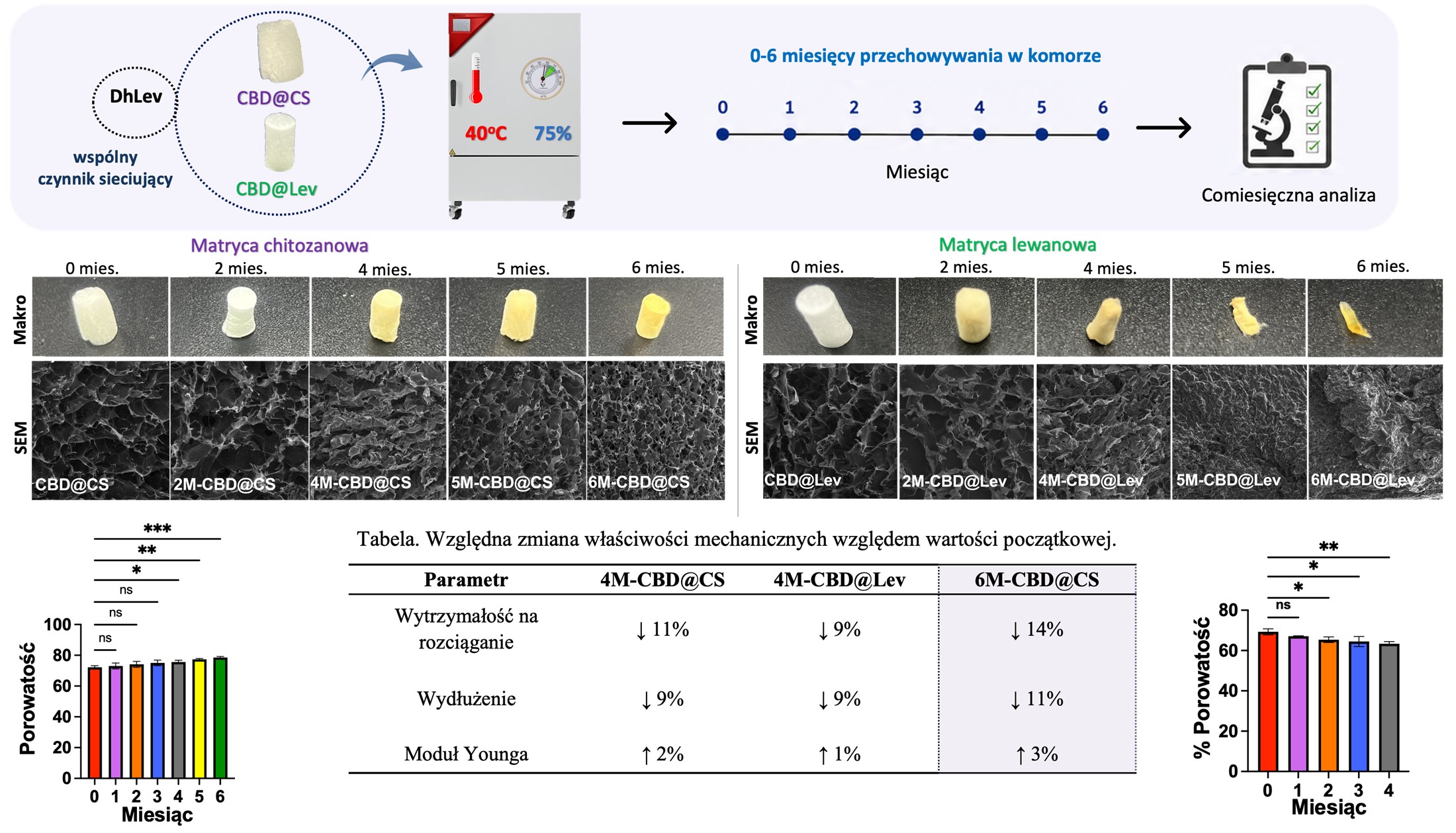
Within the project, the stability of the biomaterials was studied under accelerated climatic ageing conditions (40°C, 75% relative humidity) over periods of three and six months. The effect of storage conditions on the structure, physicochemical properties and selected biological properties of the materials was assessed.
The six-month studies revealed significant differences in the durability of chitosan and levan materials cross-linked with dialdehyde levan. The chitosan biomaterials retained their structural integrity throughout the experiment, whereas the levan materials maintained it for about four months and then underwent progressive degradation. Macroscopic and microscopic observations confirmed that the type of polysaccharide matrix plays a key role in determining material durability.
Structural changes in chitosan and levan biomaterials during six months of accelerated climatic ageing (40°C, 75% RH): macroscopic photographs and SEM images (figure in Polish).
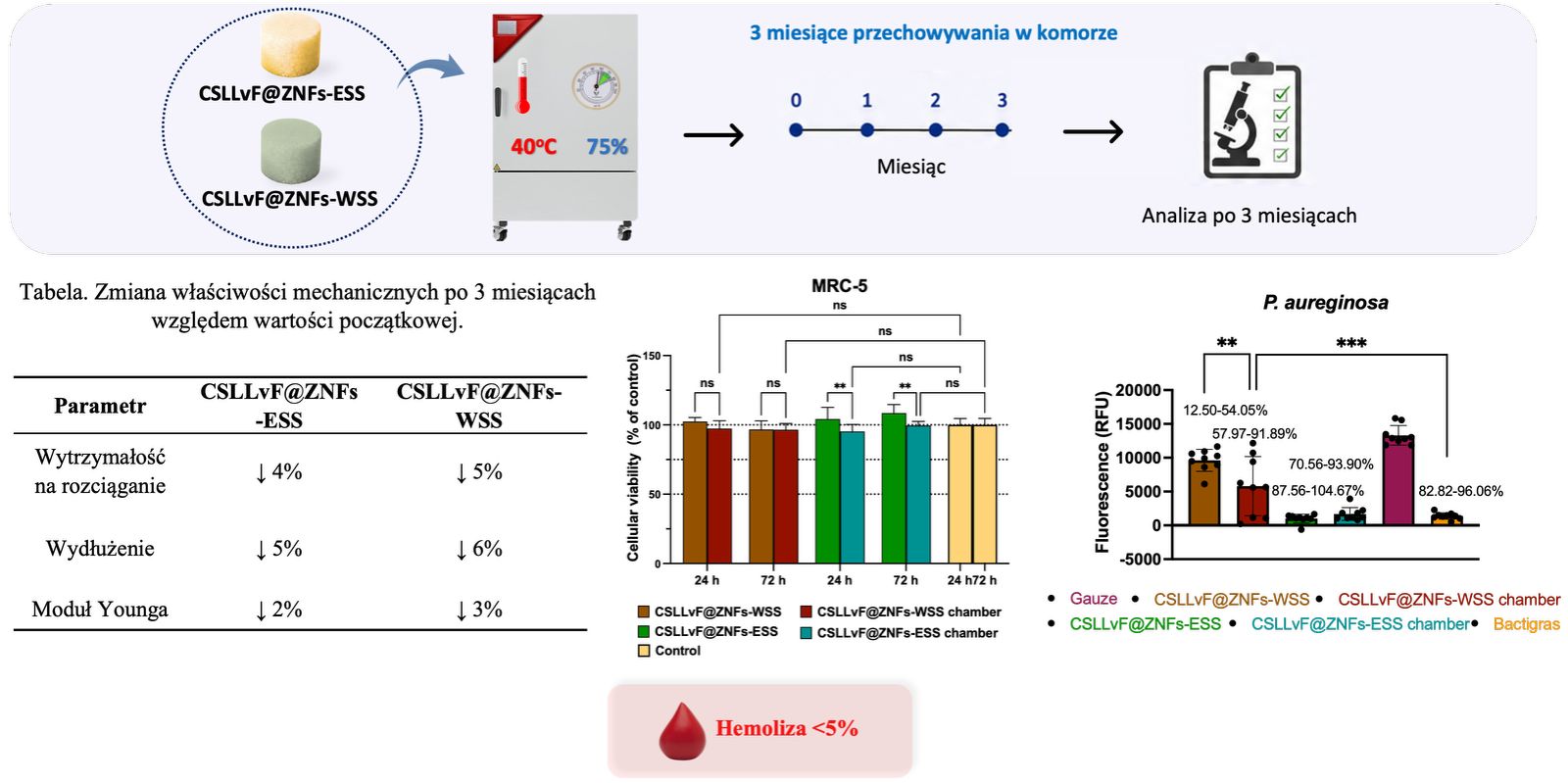
The three-month ageing studies were extended to advanced multicomponent biomaterials containing zein nanoflowers and mountain ironwort extracts. Changes in their physicochemical and biological properties were assessed, including antimicrobial activity and haemolysis. Selected materials were shown to retain favourable biological properties after exposure in the climatic chamber, with haemolysis below 5%.
The results confirmed the importance of matrix composition, the cross-linking method and the presence of functional components for the stability of the biomaterials. They provide a basis for further research on the durability and storage conditions of potential wound dressing materials.
Stability of multicomponent polysaccharide biomaterials containing zein nanoflowers and mountain ironwort extracts after three months of climatic ageing (40°C, 75% RH), including selected biological properties (figure in Polish).
Significance of the results
The project broadened knowledge in polymer chemistry, materials engineering and functional biomaterials, particularly regarding the design of active polysaccharide materials with potential wound dressing applications.
One of the most important achievements was showing that the properties of biomaterials can be shaped through an appropriate choice of polysaccharide matrix, its chemical stabilisation method and the type of functional components. The development of dialdehyde polysaccharide derivatives as macromolecular cross-linking agents expanded the possibilities of controlling the structure, mechanical and sorption properties and durability of the resulting materials.
Another significant scientific contribution was the development of multicomponent biomaterials with hybrid protein–inorganic nanoflowers and the identification of relationships between their composition, microarchitecture and biological properties. Studies of albumin and fibrinogen adsorption provided additional information on material–protein interface interactions, which are important for designing biomaterials intended for contact with the biological environment.
The results provide a basis for the further development of multifunctional wound dressing materials that combine suitable physicochemical properties with antimicrobial activity. Further studies, including more advanced biological models and direct assessment of haemostatic properties, will make it possible to verify the potential of the developed solutions for emergency medicine and wound protection in battlefield conditions (TCCC).
Scientific publications
The results obtained during the project were presented in nine scientific papers published in international journals.
Eight of these papers formed part of the series constituting the scientific achievement entitled “Strategies for the stabilization and functionalization of polysaccharides in the design of active biomaterials”, presented in my habilitation procedure.
Contact
· Faculty of Chemistry, NCU, Gagarina 7, 87-100 Toruń, Poland